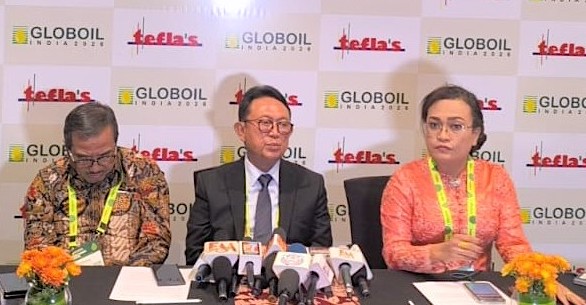
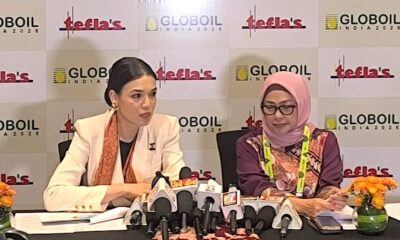
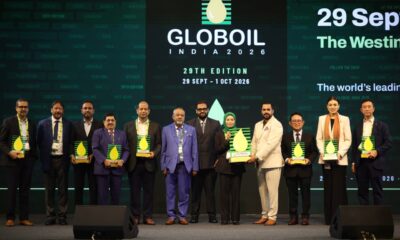
(From L-R): Dr. Fadhil Hasan, Senior Economist and Head of the Foreign Affairs Division, Indonesian Palm Oil Association (GAPKI); Mr. Eddy Martono, Chairman, GAPKI; and Ms. Lolita Bangun, Deputy Secretary-General, GAPKI
GAPKI briefs international buyers on export governance reforms and their expected impact on global palm oil supply and prices
MUMBAI, India, October 02, 2026 — Indonesia’s Palm Oil Association (GAPKI) presented an update on the country’s evolving crude palm oil (CPO) policy landscape on 30 Sept at GLOBOIL India 2026, the 29th edition of one of the world’s largest edible oil and agri-trade conferences, held September 29–October 1 at The Westin Mumbai Powai Lake.
Dr. Mohamad Fadhil Hasan, GAPKI’s Head of Foreign Affairs, spoke during the conference’s Palm Oil Session, a Producer Bloc panel held on Day 2 alongside representatives from other palm-oil producing countries. His participation followed opening remarks delivered earlier that day by GAPKI Chairman Eddy Martono at the conference’s Inaugural Ceremony, underscoring the association’s high-level presence at this year’s event. GAPKI’s participation in the forum is sponsored by Indonesia’s Palm Oil Fund Management Agency (BPDP).
The briefing was aimed at giving international buyers a clearer picture of Indonesia’s regulatory direction and easing market concerns over the availability of palm oil, as the country remains the world’s largest producer with a 57.5% share of global supply.
Three Policy Shifts Reshaping Indonesia’s CPO Trade
Dr. Hasan outlined a comprehensive overview of the government’s latest policies affecting the industry and its buyers — covering stock levels, export levies and reference prices — alongside three structural reforms taking effect between 2026 and 2027:
- Single-Gate Export via PT Danantara Sumberdaya Indonesia (DSI): A new governance framework channels exports of strategic natural resources such as coal, CPO and ferro alloy through the state-owned entity DSI. The rollout has two phases: a Transition Phase (June 1–December 31, 2026), in which exporters continue transacting directly with foreign buyers while reporting to DSI, followed by an Implementation Phase (from January 1, 2027), in which DSI takes over as exporter of record for all strategic commodity shipments, contracts, permits, levies and foreign-exchange receipts.
- Strategic Minerals and Commodities Exchange (BMKS): A new commodities exchange, targeted to launch January 1, 2027 under the supervision of Indonesia’s Financial Services Authority (OJK), is designed to establish an independent Indonesia Reference Price (IRP) for strategic commodities including palm oil. GAPKI has voiced support for the initiative, conditioned on seven governance expectations: freedom from conflicts of interest, leveraging Indonesia’s dominant market position, high trading liquidity and volume, full traceability, transparent price discovery, strong data interoperability among regulators, and cost efficiency for industry participants.
- B50 Biodiesel Mandate: Indonesia is shifting its biodiesel blending mandate toward B50, with full implementation targeted for GAPKI says current domestic biofuel production capacity is sufficient to support the mandate, but cautions that rising domestic consumption will progressively reduce the volume of CPO available for export, a trend expected to deepen in 2027 with knock-on effects on state revenue and industry financing.
2027 Outlook: Tighter Supply, Firmer Global Prices