Editor Picks
10–15% of Treated Head and Neck Cancer Patients Experience Recurrence, Says Expert


Published
2 months agoon
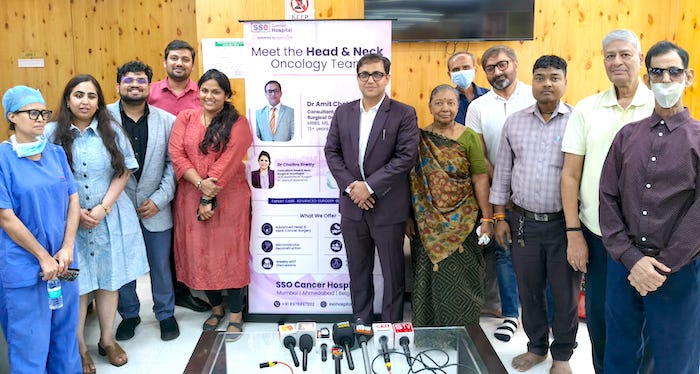
Head and neck cancer can recur at the original site, neck lymph nodes, or spread to organs such as the lungs, bones, or liver. Expert stresses that quitting tobacco and alcohol, along with regular follow-up visits, plays a crucial role in reducing the risk of recurrence and improving long-term outcomes
Two Oral Cancer Survivors Opened Up About How Timely Treatment and Early Detection Gave Them a Second Chance at Life
Mumbai: As India continues to witness a steady rise in head and neck cancer cases, experts are drawing attention to an equally important but often overlooked challenge, which is cancer recurrence. While advances in surgery, radiation therapy and medicines have significantly improved survival, treatment does not always mark the end of a patient’s journey. Approximately 10–15% of treated head and neck cancer patients experience recurrence, making regular follow-up and timely intervention essential for improving long-term outcomes. However, recurrence should not be seen as the end of hope. When detected early and treated promptly, many patients can successfully overcome the disease and continue to lead healthy, cancer-free lives.
Head and neck cancer is a group of cancers that develop in the mouth, tongue, throat, voice box (larynx), nose, sinuses, salivary glands and other tissues of the head and neck region. It affects areas involved in speaking, swallowing, breathing and eating, making early diagnosis and treatment essential.
Ahead of World Head and Neck Cancer Day, Dr. Amit Chakraborty, Head and Neck Cancer Surgeon, SSO Hospital, Ghatkopar, Mumbai, highlighted the growing burden of head and neck cancers in India, the challenge of recurrence after treatment, and the importance of early diagnosis, regular follow-up and lifestyle modification in improving patient outcomes.
Two cancer patients share how they bravely battled cancer. 43-year-old patient Mr. Mihir Jobanputra said, “When I first noticed an ulcer in my mouth, I thought it would heal on its own, so I ignored it for nearly 70–80 days. But when it refused to go away, I realised something wasn’t right. On the doctor’s advice, I underwent a biopsy, and the results confirmed oral cancer. My family and I were shocked and anxious. I then consulted Dr. Amit Chakraborty at SSO Hospital. After evaluating my reports, he reassured me that the cancer had been detected at an early stage. He advised me to undergo surgery without any further delay as there was a good chance that I could avoid chemotherapy and radiation therapy. Within a week, I underwent the procedure and stayed in the hospital for about 5–7 days. The care I received from Dr. Amit and his team gave me hope during one of the most difficult phases of my life. After the surgery, another biopsy was performed, and the reports were normal. So, never ignore a mouth ulcer or any unusual change in your body. If an ulcer does not heal within 5-10 days, consult a doctor. Timely detection can make treatment simpler, reduce the need for more aggressive therapies, and enhance the chances of recovery. Listen to your body, don’t delay seeking help.”
Another 70-year-old patient, Mr. Dinkar Nivrutti Adhav, said, “I started smoking at the age of 25. When I was young, I did not experience any health issues or symptoms because of smoking. However, as I grew older, my addiction worsened. What started as one cigarette a day eventually increased to two to three cigarettes daily. One day, I noticed a white patch (ulcer) inside my mouth. Even after undergoing various treatments, I didn’t find any relief. Then, I consulted Dr. Amit Chakraborty at SSO Hospital. After evaluation, he immediately recognized the seriousness of the case. I underwent successful treatment on January 20, 2026, for oral cancer. Later, detailed evaluations confirmed that the cancer had been completely removed and I did not require chemotherapy. I was discharged from the hospital on January 27, 2026. Today, I am leading a healthy and normal life. Through my journey, I would like to urge everyone to understand that smoking is life-threatening. Avoid tobacco and smoking, adopt a healthy lifestyle, and seek timely medical attention if you notice any unusual symptoms. Early diagnosis and treatment can make all the difference.”
Dr Amit Chakarborty said, “Head and neck cancer cases have been rising across the country in people aged 30-75. This is mainly linked to continued use of tobacco and gutkha or areca nut, rising alcohol use, and a growing number of throat cancers linked to Human Papillomavirus (HPV), increasingly seen in younger patients who don’t smoke. Better awareness and more people coming in for check-ups may also mean more cases are being picked up.”
At SSO Hospital, oral cancers account for the largest proportion of head and neck cancers treated. The department performs an average of 2–3 head and neck cancer surgeries every day, amounting to nearly 700–800 surgeries annually. Nearly 40% of surgeries involve cancers of the buccal mucosa and lower alveolus, followed by thyroid cancers (20%), tongue cancers (15%), palate cancers (10%), laryngeal cancers (8%), other oral cavity cancers (5%), and parotid cancers (2%). The surge in head and neck cancer cases is mainly linked to continued use of tobacco and gutkha or areca nut, rising alcohol use, and a growing number of throat cancers linked to Human Papillomavirus (HPV), increasingly seen in younger patients who don’t smoke. Better awareness and more people coming in for check-ups may also mean more cases are being picked up.
Dr. Amit Chakraborty added, “The predominance of oral cancers serves as a strong reminder of the harmful effects of tobacco and areca nut use and the importance of early detection and timely treatment.” Despite advances in treatment, recurrence continues to remain one of the biggest challenges in head and neck cancer care, making long-term follow-up an essential part of recovery.
Dr. Amit Chakraborty highlighted, “Cancer recurrence is a real and recognised concern. About 20 to 40 out of every 100 patients treated for head and neck cancer will see the disease return, most often within the first two to three years after treatment. This is why regular follow-up during this period is extremely important. Approximately 10–15% of treated head and neck cancer patients experience recurrence. The chances of cancer coming back depend more on how advanced and aggressive the disease is than where it started. Patients diagnosed at a later stage, those with cancer cells found at the edges of the removed tissue, or whose cancer has spread outside a lymph node or along a nerve have a higher risk of recurrence, and this can happen with cancer at any site. Recurrence may occur at the original site, in the lymph nodes of the neck, or spread to organs such as the lungs, bones, or liver, and its location determines the treatment approach.”
He further explained that oral cancers tend to recur slightly more often in India because prolonged tobacco and areca nut use damages the lining of the mouth.
Dr. Amit Chakraborty said, “The entire lining of the mouth is often affected by long-term tobacco and areca nut use. Because of this, another cancer can develop nearby, which may appear to be a recurrence even though it is technically a fresh cancer.”
Explaining why recurrence can happen even after successful treatment, Dr. Amit Chakraborty explained, “Cancer can return for several reasons. Sometimes, a few cancer cells may remain in the body after treatment but are too small to be detected at that time. Continuing tobacco or alcohol use can further damage the affected tissues, increasing the risk of the cancer returning or even a new cancer developing. In some cases, the cancer itself may be more aggressive. However, this does not usually mean that the original treatment was unsuccessful. Patients diagnosed at an advanced stage, those with cancer cells at the margins of the removed tissue, cancer spread outside a lymph node, individuals who continue tobacco or alcohol use, and those who miss regular follow-up visits remain at the highest risk of recurrence.”
Approximately 12–15% of all head and neck cancer surgeries performed at SSO Hospital are carried out in the recurrent setting, while 20% of these recurrent cases were primarily treated at SSO Hospital, Ghatkopar, Mumbai.
Offering hope to patients and their families, Dr. Amit Chakraborty said, “A recurrence is not the end of the road, and patients should never lose hope. With further surgery, repeat radiation or medicines, the disease can often be brought under long-term control, especially when detected early through regular follow-up. We have treated patients who have remained cancer-free even after treatment for recurrent head and neck cancer, giving hope to others facing a second diagnosis. Being diagnosed with cancer is emotionally and physically overwhelming, and a recurrence can be even more difficult to accept. However, it is never too late. Regular follow-up, quitting tobacco and alcohol, recognising new symptoms early, and seeking timely treatment can make a significant difference in helping patients live longer, healthier, and cancer-free lives.”
Dr. Amit Chakraborty also announced the upcoming launch of SSO Hospital’s dedicated Head and Neck Cancer Centre of Excellence. “The centre will bring advanced screening, accurate diagnosis, complex surgeries, reconstructive care, medical and radiation oncology, rehabilitation and long-term follow-up under one roof. With a multidisciplinary team and advanced technology, we aim to deliver timely, personalised treatment and improve outcomes for every patient,” he concluded.